A researcher is using ecology and architecture to promote coral larvae settlement research in Bundaberg.
Dr Despina Linaraki, from Griffith’s School of Engineering and Built Environment, has developed tiles which have been placed in tanks at Monsoon Aquatics’ Bundaberg facility.
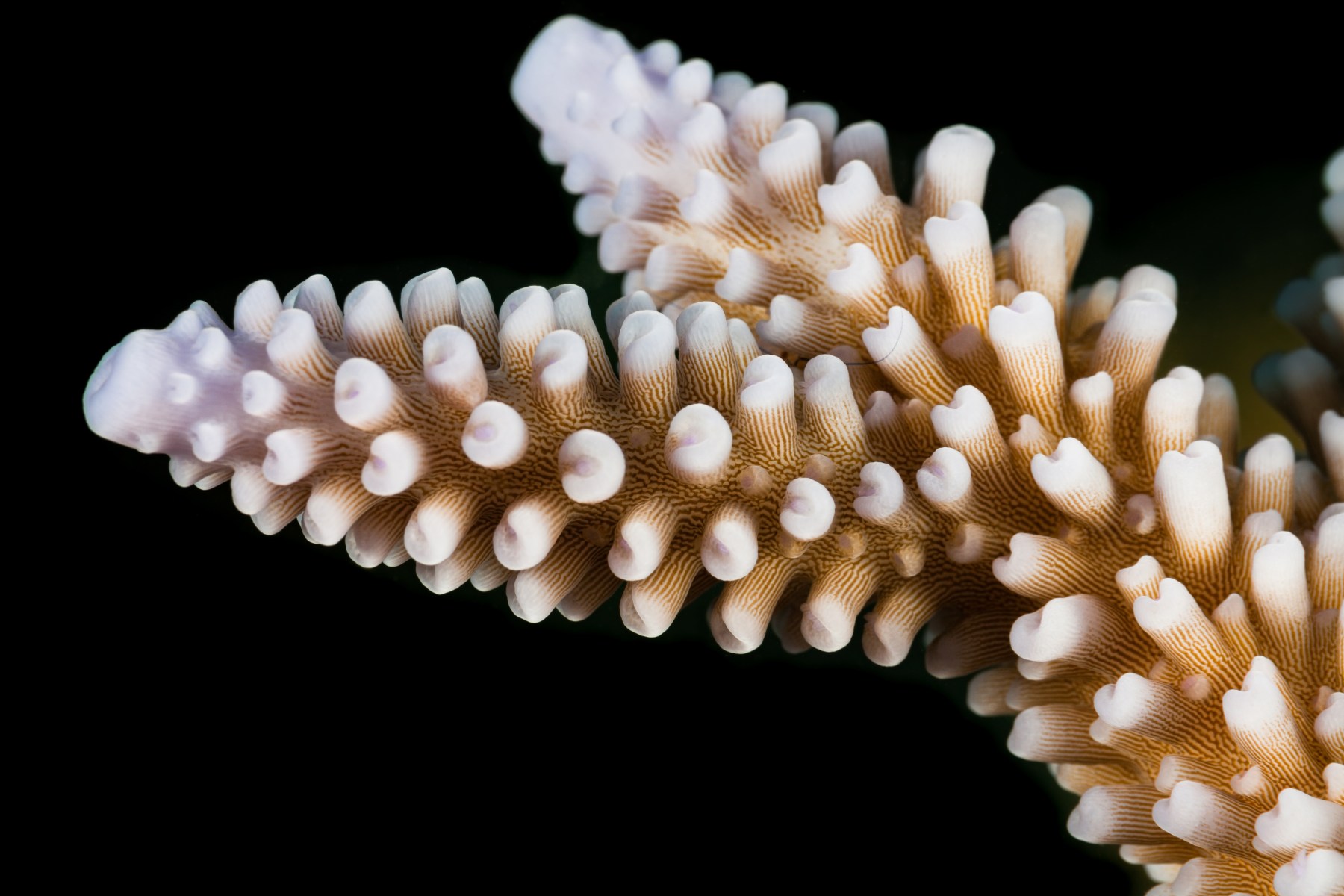
Acropora corals have been successfully settled on the tiles, allowing valuable insights into how surface design could improve coral settlement and growth.
The settlement rate of Dr Linaraki’s tiles is more than four times higher on average, relative to a standard flat ceramic tile under the same conditions.
“Corals begin their coral spawning journey as free-swimming larvae, where they remain in the water column for days to weeks before settling onto suitable surfaces, undergoing metamorphosis, and growing into new coral colonies,” she says.
“Working with living systems takes time, so it’s especially rewarding to see meaningful results after two years of experimentation.
“Since corals were the ‘clients’ in this context, this study investigated the best possible habitats to support their growth and survival.
“It’s inspiring to see how architectural design can contribute to the adaptation of corals, and how spatial strategies can actively inform coral habitats.”
“The impact of architectural design on the construction of large-scale artificial reefs to promote coral attachment and growth has largely been overlooked, and to the best of our knowledge, no similar study has tested the architectural design of these structures in a systematic way.
“This research suggests incorporating corals as fundamental design elements could lead to structures that self-grow, self-adapt, and self-maintain, reducing the need for additional funding, materials, and technological resources over time, while increasing the ecosystem services and providing habitats for corals and other living organisms.”
Monsoon Aquatics Head Scientist Dr Jonathan Moorhead says the research is warmly welcomed at their Bundaberg Research facility.
“Dr Linaraki’s work fits into our goals and aspirations to understand coral reproduction and settlement, and be leaders in sustainable coral farming for the aquarium trade and reef restoration efforts.
“Monsoon Aquatics is uniquely placed to build sustainability into the global aquarium trade and contribute to growing efforts in reef and marine habitat restoration in Australia through conservation aquaculture activities.”
Nine biomimetic designs were created using Maya and Rhinoceros 3D to optimise surfaces for coral settlement aiming to support the attachment and growth of different coral types.
The research investigates what surfaces, materials and colours are most enticing for coral settlement.
A total of 85 prototypes measuring 15cm × 15cm were made, incorporating five materials –3D printed PETG, concrete, oyster concrete, coral concrete and clay – and seven colour variations – sand, translucent green, translucent brown, bright red and pink, brownish-red and grey.
The ongoing study will investigate how material and colour influenced the habitation of coral larvae.
Further research is expected to explore the synergy of architecture with ecology for the construction of large-scale structures in the water that could support both human and coral habitation.